How to tell if a competitor’s funnel is actually scaling (before you model it)
Run length is the signal everyone checks and the one most likely to mislead you. Here are the seven signals we read together, what each can and can’t tell you, and a 45-minute audit you can run on any competitor.
On this page
Every coach and course creator who runs paid traffic eventually does the same thing. They open the ad library, search a competitor, scroll to the oldest ad, and decide: this has been running since February, so it must be working.
Sometimes that conclusion is right. Often it isn’t. And if you build your next launch on a funnel that only looked like it was scaling, you inherit someone else’s guess, plus the cost of finding out the hard way.
This guide is the method our research team uses to separate funnels that are genuinely scaling from funnels that are simply still switched on. It works with free tools, it takes about 45 minutes per offer, and it will probably change which competitors you pay attention to.
Run length is a real signal. An advertiser who keeps paying for the same message for six months is rarely losing money fast on it. The problem is that run length measures persistence, not profit, and plenty of ads persist for reasons that have nothing to do with performance.
An ad can stay live because it converts. It can also stay live because it spends $15 a day on a warm retargeting audience nobody reviews, because a larger brand is paying for awareness, or because the media buyer who launched it left in April and nobody switched it off. From the outside, all four look identical: a start date and an “Active” label.
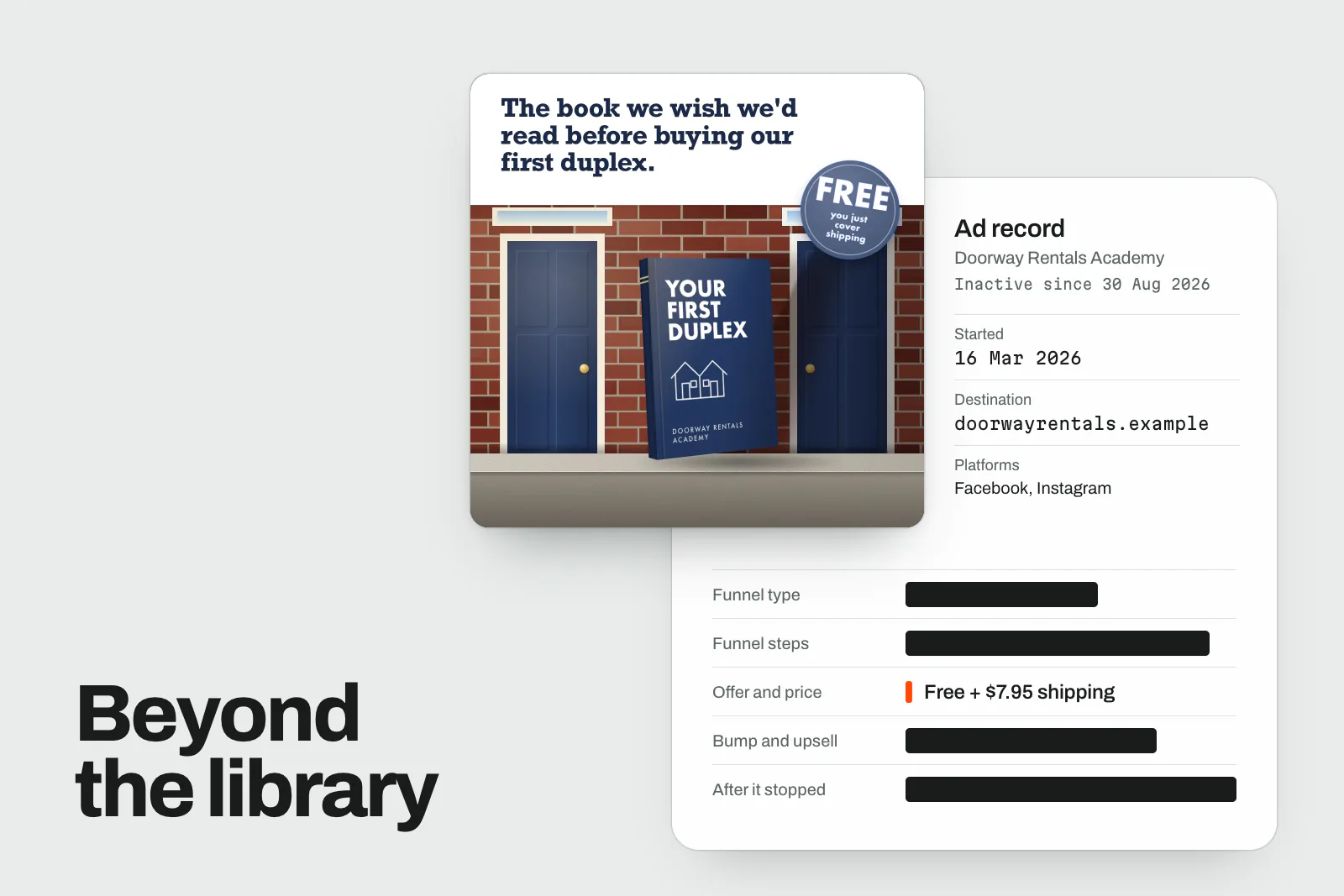
The public data has two more blind spots. First, for anything other than ads about social issues, elections, or politics, the Meta Ad Library does not show spend. Ads delivered in the EU come with estimated reach and some audience breakdowns, which helps, but reach is not cost per sale. Second, commercial ads delivered outside the EU generally drop out of the public library once they stop running. The ad you screenshot today may be gone next month, and so is the evidence of how long it ran.
That second problem is why every campaign record in Spellbind keeps its own first-seen and last-seen dates: the history survives after the creative rotates out. Whichever tool you use, though, the question has to change. Stop asking how long has this ad been running? and start asking what is this advertiser doing with money, over time, around this one offer?
No public signal proves a funnel is profitable. What you can do is collect several independent signals and check whether they point the same way. When run length, creative investment, expansion, and funnel design all agree, you have directional evidence worth acting on. When they disagree, you have a question worth tracking.
Here are the seven we check, with the honest limit of each.
| Signal | What it suggests | What it does not prove | Where to find it |
|---|---|---|---|
| Run length (first-seen to last-seen) | The advertiser keeps paying for this message over weeks or months | Profit. Low-budget retargeting and forgotten ads also run for months | Start date on each ad in the Meta Ad Library; campaign history in your own records |
| Variants per concept | The team is investing in the angle, testing hooks, formats, and thumbnails around it | Which variant is winning, or that any of them are | Grouped ads (“ads use this creative and text”) and the advertiser’s full ad list |
| New creative velocity | Fresh budget is flowing to the offer, since scaling accounts need new creative to fight fatigue | That the new spend is working. Struggling advertisers launch lots of ads too | Ad Library results sorted by newest; a weekly check of each advertiser’s newest start dates |
| Placement and geo expansion | Confidence to widen reach: new countries, languages, or placements added over time | Unit economics in the new markets | Platform icons and the country filter in the Ad Library |
| EU reach estimates | Real delivery at meaningful volume in at least one region | Spend, cost per result, or performance outside the EU | The EU transparency panel on individual ads |
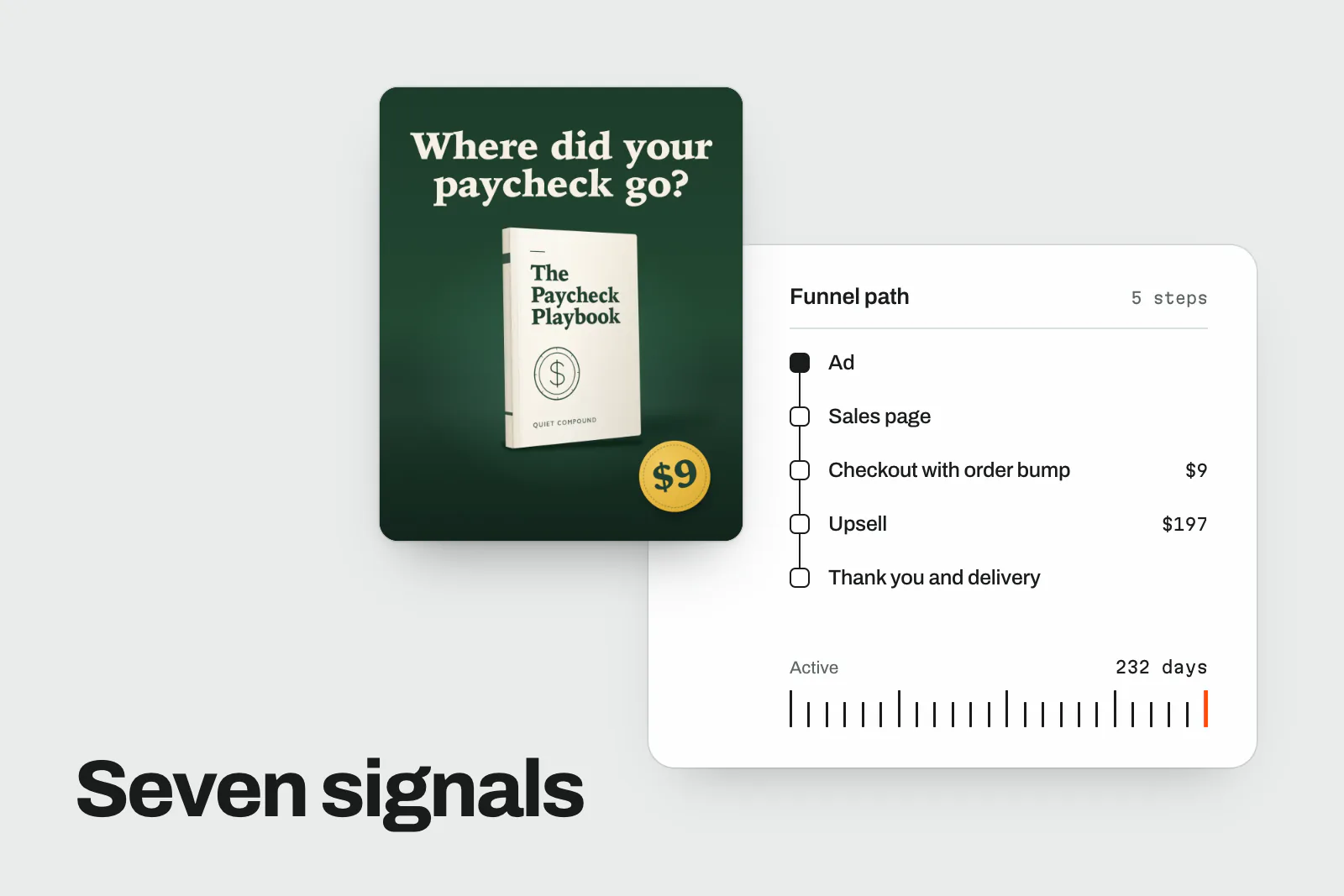
| Funnel depth (bumps, upsells, downsells) | An offer engineered to raise order value so it can pay for cold traffic | Take rates on any of those steps | Walking the funnel yourself, step by step |
| Landing page iteration | Someone is actively optimising: new headlines, price changes, fresh proof | That the changes improved conversion | Page snapshots over time; the Wayback Machine |
Read the third column twice. Every signal has an innocent explanation, which is exactly why no single one should drive a decision. The value is in the overlap.
In practice, most offers you audit fall into one of three patterns. Learning to recognise them quickly is most of the skill.
Pattern 1: the steady earner
Long run length, few new variants, a landing page that barely changes. You see this a lot with evergreen low-ticket offers: a $27 guide, a $47 mini course, a paid challenge that has run the same way for a year. The offer is probably paying for itself at a fixed budget. It is probably not scaling, because scaling accounts need a steady supply of new creative to hold performance as audiences tire of the old ads.
Worth modelling for: offer structure and pricing. Less useful for: creative angles, because nobody is testing anything.
Pattern 2: the scaling push
This is the pattern worth your attention. One concept has been running for 60 days or more, and it keeps spawning new variants. New ads point at the same landing page URL. The advertiser adds countries or placements. The funnel has an order bump and at least one upsell, and the page shows signs of active testing: a new headline, a price change, a fresh block of testimonials.
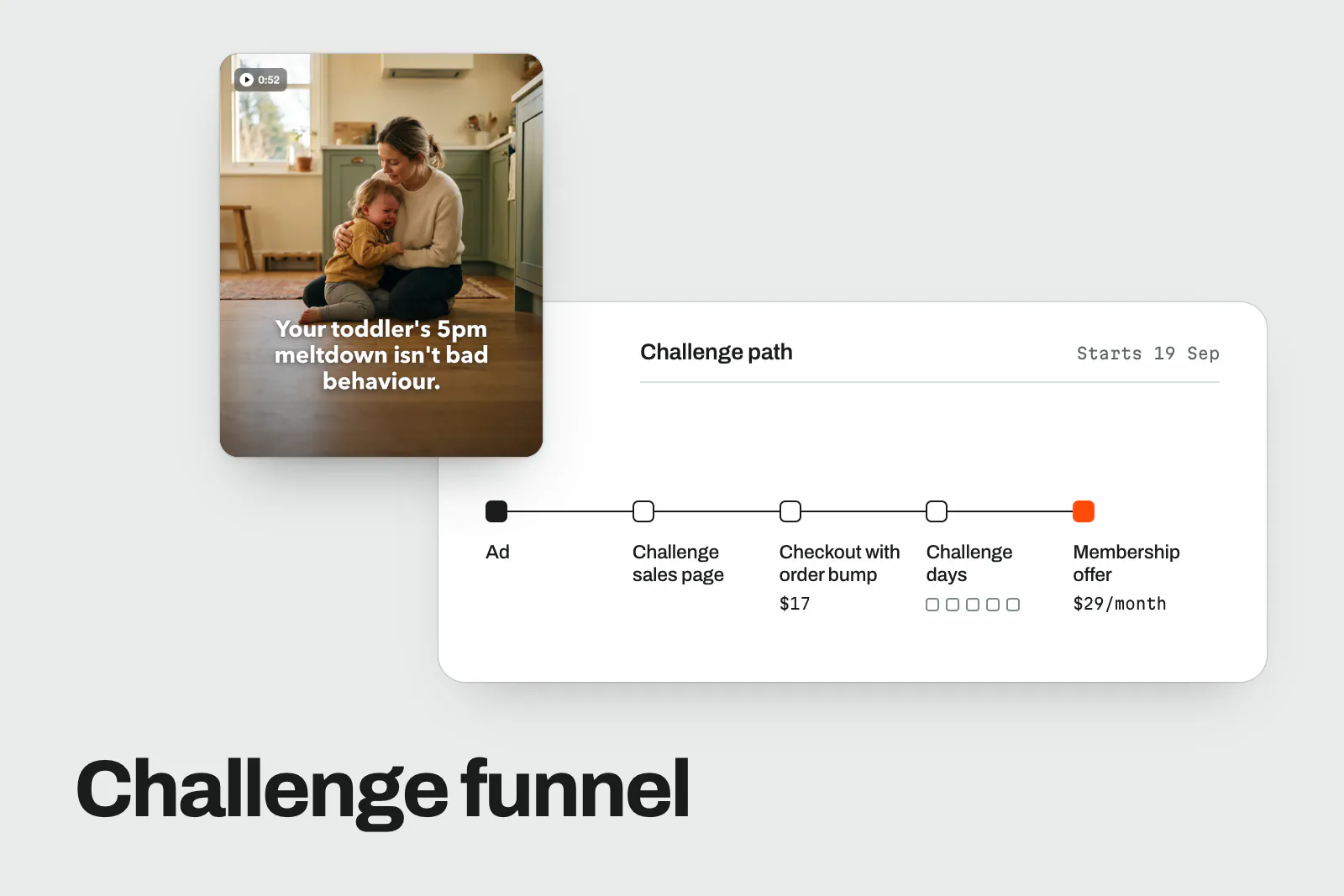
Picture a hypothetical business coach running a five-day challenge. The first ad appears in March. By June there are 30 active variants on the same angle, the checkout has added a VIP upgrade, and the same ads have launched in the UK and Australia. Advertisers rarely fund that kind of expansion unless the front end is at least holding its own.
Pattern 3: the expensive test
Lots of new ads, but short lives across the board: most creatives are gone within two weeks. The landing page changes constantly, and a new offer appears every month. On a quick scan it can look like scaling, because the library is full of fresh ads. More often it is a team searching for a winner.
Worth tracking, not modelling. If one of those tests starts surviving past 30 days and collecting variants, it has moved into pattern 2, and that is the moment to look closely.
Long-running concept
New version of it
Other ads
IllustrativeSteady earner
Scaling push
Expensive test
You can run this with the free ad library, a browser, and a spreadsheet. Do it for one offer at a time. The order matters, because each step narrows what the next one has to look at.
- Pick one offer, not one advertiser. Write down the offer name, the front-end price, and the landing page URL. Many coaches run three or four offers at once, and mixing them muddies every signal that follows.
- Pull every active ad pointing at that URL. Search the advertiser’s page in the ad library, filter to active ads, and open each destination. Keep only the ads that land on your chosen offer.
- Record the oldest and newest start dates. The gap tells you how long the offer has been funded. The newest date tells you whether it is still being fed. A newest date from last week matters more than an oldest date from last year.
- Count concepts and variants. A concept is one angle or hook idea; variants are the formats, thumbnails, and opening lines built around it. Flag any concept with five or more live variants.
- Check geography and placements. Note which countries and platforms each concept runs on. For ads delivered in the EU, open the transparency panel and note the reach estimate.
- Walk the funnel. Opt in, or go as far as the checkout, and screenshot every step: opt-in page, sales page or video, order form, bump, upsell, thank-you page, call booking. Write down the price at each step.
- Check the page history. Load the landing page in the Wayback Machine and compare the headline, price, and guarantee across the last three to six months.
- Score it and decide. Mark each of the seven signals as present, absent, or unclear. Three or more present, plus a funnel you can map end to end, means the offer is worth modelling. Fewer than three: track it and check again in 30 days.
Done by hand, this is very doable for one competitor. It gets heavy at five competitors a month, which is where tooling earns its keep. In Spellbind, the ads, pages and funnel steps for an offer sit on one campaign record, and BrandTrack shows what a watched competitor launched and stopped since your last visit. Alerts are planned. Steps 2 to 5 become a review rather than a rebuild; the funnel walk and page history are still yours, and so is the judgement in step 8.
Even with a method, some patterns reliably fool people. These are the ones we see most often in expert-led markets, with the tell that gives each one away.
- Evergreen retargeting. Low-budget ads shown only to warm audiences can run for a year. The tell: testimonial-heavy or “doors close soon” copy that assumes you already know the brand.
- Brand and awareness spend. Larger personal brands amplify podcast clips and content that are not tied to an offer. The tell: the destination is YouTube, a podcast, or a homepage, not a sales or opt-in page.
- Launch bursts. A big launch can put 50 new ads into the library in a week, then go dark. Velocity looks like scaling, but it is a calendar event. The tell: countdown language and cart-close dates.
- Forgotten ads. Old ads still spending against a page that has moved on. The tell: the destination redirects, 404s, or shows a price that no longer matches the ad.
- Agency or multi-offer pages. One page running unrelated offers in different styles. The tell: the offers share nothing but the page name, so signals from one offer tell you nothing about another.
- Copycat clusters. When several advertisers run near-identical ads, the one you found first may not be the original, or the one that is working. The tell: compare first-seen dates across advertisers before deciding who to study.
“The ad that has run the longest is usually the one nobody is looking at anymore. The concept that picked up five new versions last week is where someone is putting real money.”
The fix for all six is the same: look for signs of ongoing investment, not just survival.
Say an offer passes the audit. The next discipline is harder: separating the structure you can learn from and the substance that belongs to someone else. Get this wrong and you end up with a weaker copy of a competitor’s funnel, plus a compliance problem.
What to take: the structure
Model the offer shape (entry price, bump, upsell sequence, call step), the funnel format (challenge, webinar, video sales letter, application), the angle category (first client, time freedom, a specific skill), and the creative formats that keep getting new variants (founder to camera, text on screen, results carousels). Also model the testing cadence: how often they refresh creative tells you what your own budget will need to sustain.
What to leave: the substance
Leave their specific claims, income figures, testimonials, brand names, visual identity, and exact copy. Beyond the ethics, unverified income claims are exactly what ad platforms scrutinise in the coaching and education space. Your version needs your own proof, or it needs to make a smaller claim.
We built Creative Studio Beta around this rule. Every creative Studio makes keeps a link back to the ad it was modelled on, so your team can always trace the source. If you work in a spreadsheet instead, add a column for exactly that.
Before you brief a single creative, check you can tick every box:
Before you brief
0 of 6 ticked
Saved in this browser only.
How long does a Facebook ad need to run before it counts as a winner?
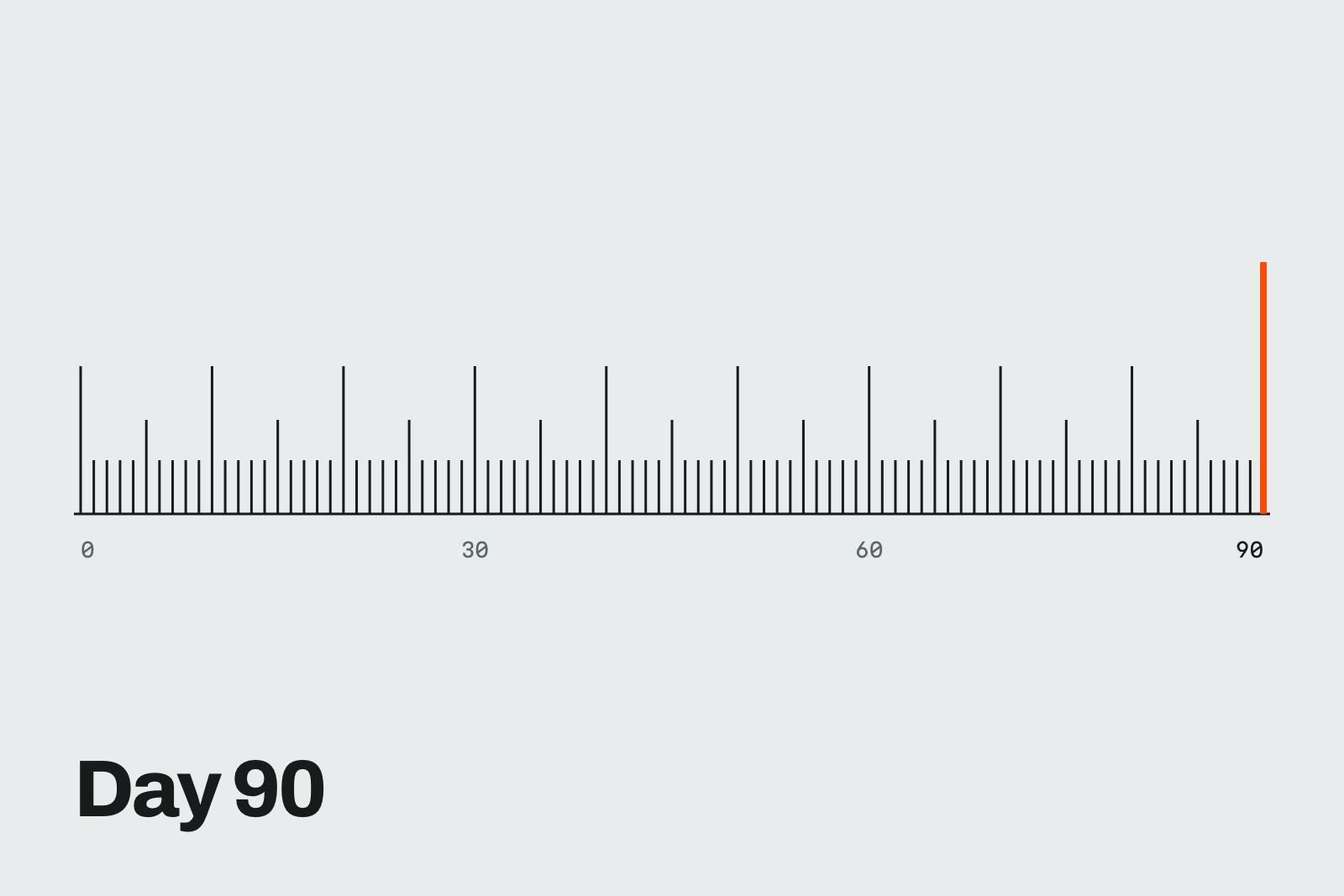
There is no universal threshold. Many media buyers treat 30 days as the point where an ad has survived its initial test, and 90 days or more as a strong persistence signal. But run length needs company. Check whether the concept is still getting new variants and whether the funnel behind it is built to pay for traffic.
Can I see how much a competitor spends on ads?
Not for most ads. Meta publishes spend ranges only for ads about social issues, elections, or politics. For ads delivered in the EU you can see estimated reach, which is a rough proxy for delivery but says nothing about cost. Any tool that shows an exact competitor ROAS is estimating, and it should say so.
Is it okay to model a competitor’s funnel?
Studying publicly visible ads and pages is standard market research. Copying someone’s copy, images, testimonials, or trademarks is not. Model the structure and the format, write your own words, and use your own proof. If you are unsure about a specific case, ask a lawyer rather than a blog post.
How often should I re-check a competitor?
Monthly works for most of your market. Check your two or three closest competitors weekly, and more often around their launch windows. The most useful information is usually a change: a new offer, a new price point, a new upsell, or a new country.
A funnel is worth modelling when several independent signals agree: it has been funded for a while, it is still being fed new creative, it is expanding, and the funnel behind it is built to pay for traffic. Any one of those on its own is a guess. Together, they are directional evidence, which is the most honest thing public data can give you.
Pick one competitor this week and run the 45-minute audit on their main offer. If it scores three or more, you have something worth modelling. If it doesn’t, you have saved yourself a launch built on someone else’s guess. Either way, you will never read the ad library quite the same way again. For the tools side of the job, see our guide to Facebook Ad Library alternatives and our comparison of ad spy tools for expert-led businesses.